


Sea and container shipping to Uzbekistan
When the shipment is large and the route allows a long leg
Transit time: 30–50 days
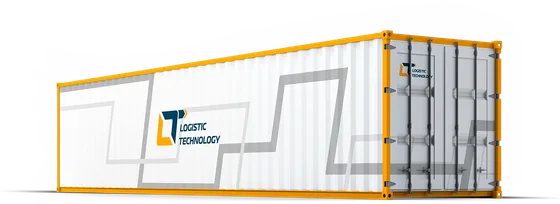
Uzbekistan has no sea coast, so shipping here is always a combined route: the vessel brings the container to a port and from there it continues by rail or by road. There is exactly one reason to do it, and it is a solid one: at large volumes the sea is cheaper than anything else. A container holds about 33 cubic metres in the twenty-foot version and up to 76 in a forty-foot high cube — two or three full trucks in one box that is not opened between the factory and your warehouse. Transit is 30–50 days, and it is honestly long: the sea leg, the port, the transfer and the overland run.
How it works
- A twenty-foot container — about 33 cubic metres, up to 28 tonnes. Chosen for heavy, dense cargo.
- A forty-foot — about 67 cubic metres; the high cube version up to 76. For bulky cargo at the same weight.
- Less than container load (LCL) — when a whole box is not needed: you pay for the volume taken, but deconsolidation on arrival is added.
- A reefer container — for food and anything needing temperature control the whole way, including the wait in port.
- The route is always in two parts: sea to the transhipment port, then rail or road to Tashkent. Both legs sit in one rate and one contract.
- Transit of 30–50 days depending on the port of loading, the line schedule and congestion at transhipment.
- We warn about demurrage and storage in advance: these are charged when the container stays with the line or in the port beyond the free days, and they add up fast. They have to be worked out before dispatch, not after the fact.
What we need from you
- The port or city of loading and the Incoterms delivery terms — they decide where the seller’s responsibility ends.
- Volume and weight of the consignment: they show whether a whole container is needed or groupage will do.
- What the goods are and whether they need temperature control.
- When the cargo will be ready: line schedules are tied to sailing dates, not to your readiness.
Why clients choose us
Something to compare with
This is not the only way: on the same route we also price road, rail and air. We show the trade-off in cost and time.
Customs handled
We select HS codes, calculate duties up front and run release through a licensed customs broker — you need not find one yourself.
One contract
We are accountable for the whole route, not just one leg of it.
Cargo insurance
Full loads and groupage insured at the client’s request.
Groupage cargo
We accept from a single pallet — no waiting for a full truck.
Status without chasing
We tell you where the cargo is before you have to ask.
How we work
-
1
Request
You send the cargo, route, weight and volume — by form, Telegram or phone.
-
2
Quote
We price the options by mode and send you a rate with transit times.
-
3
Contract
Times and cost are fixed in writing, paperwork is prepared.
-
4
Transport
We collect the cargo, run the route and keep you posted on status.
-
5
Customs and delivery
We take the cargo through customs with the broker and deliver it to your warehouse.
Frequently asked questions
How does sea freight reach a country with no coastline?
The vessel carries the container to a transhipment port, and from there the cargo goes on by rail or road. It is one carriage under one contract: we arrange the transfer in the port and the overland leg, and you do not deal with either separately.
How much fits in a container?
A twenty-foot takes about 33 cubic metres and up to 28 tonnes; a forty-foot about 67; a high cube up to 76. Volume is usually the binding limit rather than weight — a forty-foot is rarely filled to its mass limit.
What is demurrage and when does it arise?
It is the charge for a container staying beyond the free days, with the line or in the port. It arises when the cargo is not collected in time: documents not ready, customs not cleared, nowhere to unload. It accrues per day and grows quickly, which is why we flag the deadlines in advance.
When does sea beat rail?
At large volumes and where the timing is relaxed — above all from China, Korea, India and the Gulf. If time matters, rail from those same countries is faster, and the price gap turns out smaller than expected.
Can I ship less than a container?
Yes, as groupage sea freight: you pay for the volume taken. But assembly before departure and deconsolidation on arrival are added to the transit, so at modest volumes rail often wins on both money and time.
How long does transit take?
Typically 30–50 days depending on the origin, border queues and cargo type. The exact transit time is fixed in the contract.
Do you take groupage cargo?
Yes, we accept from a single pallet — no need to wait for a full truck load.
Who handles customs?
We arrange it: we pick the HS code, calculate the duties in advance and run the release through a broker. You do not need to find a declarant — we answer for the timing and the amount.
Can the cargo be insured?
Yes, we insure both full loads and groupage at the client’s request.
Request a freight quote
Describe the cargo and the route — we come back with a rate and transit time.