


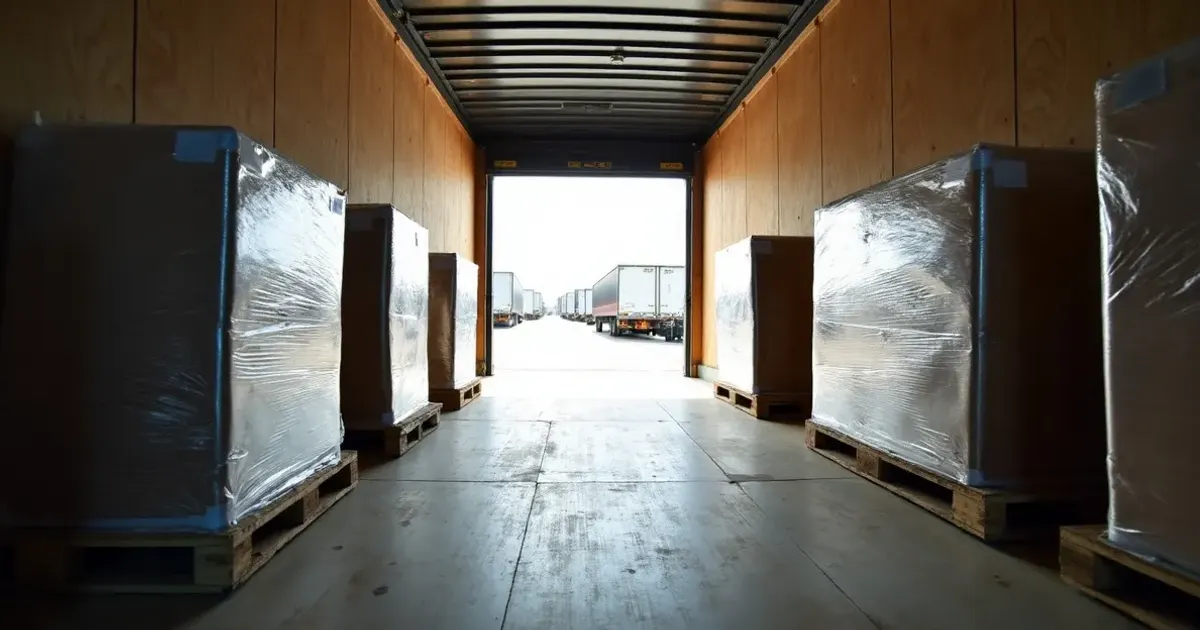
How they differ in practice
| Groupage | Dedicated truck | |
|---|---|---|
| You pay for | Your own volume or weight | The whole vehicle |
| Minimum | From a single pallet | Makes sense from 12–15 pallets |
| Transit | Longer: waiting for the truck to fill | Departs immediately |
| Handling | Several transfers at warehouses | Usually none |
| Damage risk | Higher — the cargo is moved | Lower |
Where the break-even sits
A simple guide: up to about a third of a truck, groupage wins; approaching half the gap narrows; from two thirds onward a dedicated truck almost always wins on both cost and time.
Do not compare rates alone. Groupage adds handling at the consolidation warehouse; a dedicated truck has none. A “two thirds of a truck” consignment sometimes ends up costing more than a full one, simply because transfers are billed separately.
What hides in the transit time
The non-obvious part of groupage is waiting for the truck to fill. Your cargo is ready, but the vehicle leaves when it is full. That is one to seven days, and carriers usually leave it out of the quoted transit time.
So the question to ask is “when will it be with me”, not “how long is the truck on the road”. The gap between those two answers is the consolidation wait.
When groupage does not fit at all
Fragile goods without rigid packaging. The cargo is handled repeatedly and you do not choose your neighbours.
Strong-smelling or soiling goods. They will not be accepted for consolidation — and if they are, complaints from the rest of the load come back to you.
A hard deadline. If missing it costs more than the price difference, a dedicated truck removes the main risk: the wait.
Oversized cargo. It physically will not fit a groupage load.
Cutting cost without switching to a dedicated truck
First, palletise properly. The rate is charged on the greater of actual and volumetric weight. A tightly built pallet reduces volume, and therefore the invoice.
Second, plan shipments ahead and combine several small consignments into one. Consolidating around an optimal route is exactly where a forwarder saves money without touching the carrier's rate.
Third, use advance declaration: 20% off the clearance fee and less standing time at the border, whether groupage or dedicated.